
Why I Nearly Died Trying to Lose Weight — And Why I'm Building Something Better
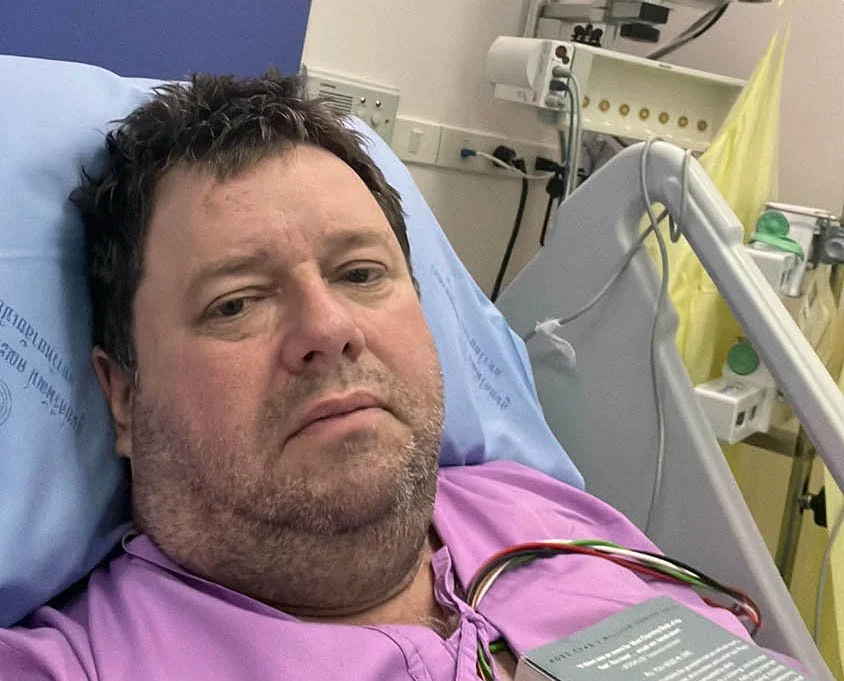
The story behind The Blueprint, told honestly.
By Simon Millard · May 2026 · 8 min read
In January 2024, I had a cardiac arrest on a treadmill in Chiang Mai. My heart stopped for twelve minutes. I was clinically dead.
I'm writing this from Koh Samui, where I've just cycled 65 kilometres. So I'll let you draw your own conclusions about how the story ends.
The Life I Was Living
I've spent over thirty years building a career in commercial real estate across Southeast Asia. I've worked with multinationals and major businesses across the region. By any measure, it went well. But alongside that career came something else — a slow, steady, embarrassingly familiar decline in my health that I became an expert at ignoring.
The excuses were plentiful. Can't afford the time. The business needs me. I'll sort it soon. I tried every diet going — nothing stuck, nothing was sustainable. Then Covid arrived, and everything got worse. By 2023, tying my shoelaces had become a challenge. Walking more than 250 metres without stopping for a rest was genuinely difficult. My family were watching all of this unfold, and they were frustrated, worried, and — if I'm honest — quietly furious.
I weighed 160 kilograms.
"I became an expert at telling myself I'd sort it later. Later kept moving further away."
The Programme — And What Happened
In January 2024, I finally did something. I enrolled on a weight-loss programme in Chiang Mai. I thought it would be the turning point. In a terrible and unexpected way, it was.
Ten days in, on a Sunday, I was alone in the gym. Unsupervised. On a treadmill. My heart stopped.
What followed is the kind of thing you only really understand if you've been told about it afterwards, because I was unconscious for all of it. A fellow participant found me. He grabbed a passing Thai man — Khun Sunny — who knew CPR. Between them, they kept enough blood moving to my brain until the paramedics arrived. Khun Sunny, a complete stranger, saved my life.
Seven weeks in hospital. A double heart bypass. Multiple surgeries. And then the slow, humbling process of learning to walk again.
The Rebuild
I want to be honest about this part too, because it doesn't fit the tidy narrative of triumphant recovery. The first months were hard in ways I hadn't expected. Not just physically. The mental adjustment — from being someone who ran businesses and regions and teams, to someone who couldn't manage a flight of stairs — takes something from you.
But the team around me during that period was extraordinary. The medical professionals, the physiotherapists, the people who told me what my body actually needed and why — they changed my understanding of what health really means. I started learning obsessively. About nutrition. About movement. About sleep, stress, and the relationship between them. About what a sustainable, long-term life in good health actually looks like, as opposed to a short, sharp programme designed to shift weight.
"54 kilograms lost. I now cycle 65 kilometres regularly. I hike. I swim. I have an active, full life."
Two years on: 54kg lost. I cycle regularly. I hike. I swim. I have an active, full life with family and friends — including the time with my son Henry that should always have been healthy and fun, but was instead lost to long hours, client entertaining, or the sofa.
I feel better now than I have in nearly thirty years.
Why This Programme. Why Now.
The experience left me with one very clear thought: the programme I attended should not have accepted me at 160 kilograms without a cardiac screening. There was no ongoing medical oversight. No emergency protocol. No one assessed whether I was fit to push myself on a treadmill. That's not a criticism designed to harm anyone — it's simply the truth of a gap that exists in this space.
And that gap troubled me, because I knew there were more people like me out there. Successful, time-poor, stubborn men and women in midlife, who had let things slide and were finally ready to do something about it — but who deserved proper support, not just a regime.
The Blueprint is what I built instead. A one-month residential programme based at a luxury beachfront villa on Koh Samui. Five pillars: Movement, Nutrition, Sleep, Wellbeing, and a Personal Blueprint — a tailored plan built over your 30 days with us, so that when you go home, you actually know what to do.
Medical screening before you arrive. An on-call doctor and partnership with local hospitals. A setting that doesn't feel like a camp or a punishment, because I genuinely believe the environment matters.
And a founder who nearly died in a competitor's programme and built something different, more gentle and with oversight from the medical team that saved me and gave me my personal Blueprint to survive, and finally to thrive!
Who This Is For
If you're reading this and recognising yourself in the excuses — the deferrals, the sense that your health is something to sort out later, once the deal is done or the quarter is over — this is for you.
Simon's message isn't doom and gloom. It's proof that it's not too late. That the turnaround can be extraordinary. He just asks that you don't wait for your own twelve-minute wake-up call to find that out.
If any part of this resonates, I'd love to hear from you.
